


 2026-03-03 16:56:20
 1145
1145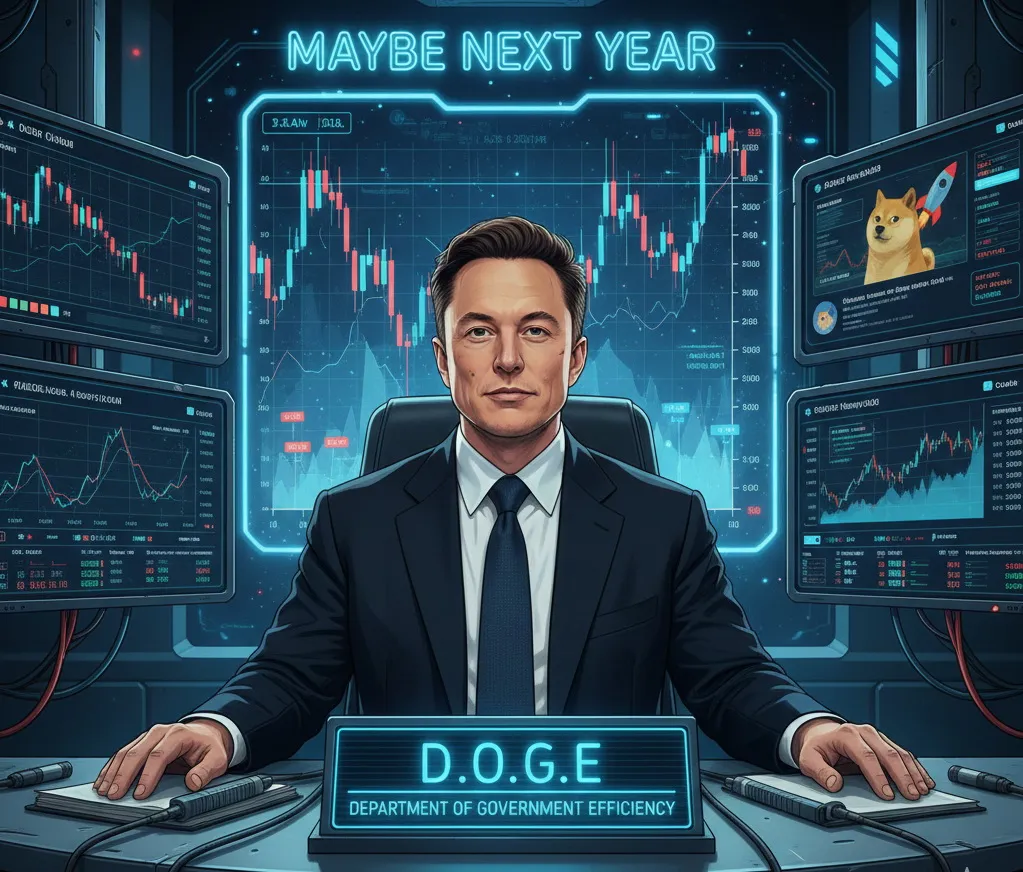
- Introduction: The End of the "Pump-by-Click" Era
- The Psychological Factor: Adaptation and Investor "Fatigue"
- Image Transformation: From "Memelord" to Statesman
- Technical and Market Reasons
- Expectation vs. Reality: The Utility Problem
- The Future of Dogecoin: Life After Musk
- Conclusion: Maturity as the New Norm
1. Introduction: The End of the "Pump-by-Click" Era
Retrospective 2021-2022: The Time of the "Dogefather"
In the early 2020s, the cryptocurrency market witnessed a unique phenomenon. Elon Musk, commanding a multi-million audience on Twitter, discovered that a brief mention of Dogecoin could instantly shift an asset's market capitalization by billions of dollars.
In 2021, a single post featuring a rocket image or the laconic word "Doge" would lead to explosive price surges of 20-50% within minutes. The peak of this era was Musk's appearance on Saturday Night Live, where audience anticipation drove the price to all-time highs. Back then, the market resembled the "Wild West," where emotions and social signals dominated fundamental analysis.
The Reality of 2026: Statistics vs. Hype
By 2026, the situation has fundamentally changed. Analysis of market data shows that the direct correlation between Musk's social media activity and the asset's price has all but vanished.
Today, a mention of Dogecoin in Elon's account (now part of his X ecosystem) causes, at best, short-term fluctuations within 2-3%. Often, these spikes are completely neutralized by the market within a few hours. Investors no longer rush to open positions "blindly," and the trading volumes generated by retail fans after yet another meme are insufficient to significantly move the price given the current liquidity.
Main Thesis: Market Maturation
The main reason for this is the institutionalization and "maturing" of the market. Over five years, Dogecoin has evolved from a playful novelty into a top-ten asset, traded on all major exchanges and incorporated into the algorithmic strategies of large hedge funds. The market is no longer emotionally driven; it has become calculating. Sustainable growth now requires not words, but technical upgrades, real-world integrations, and an increase in on-chain transaction volume.
2. The Psychological Factor: Adaptation and Investor "Fatigue"
Habituation (The Plateau Effect)
In psychology, there is the concept of "habituation"—a gradual decrease in response to a repeated stimulus. In the context of Dogecoin, we are observing a classic "plateau effect." When an investor sees a Shiba Inu meme in the billionaire's profile for the hundredth time, the brain stops perceiving it as a signal for immediate financial action. The novelty is gone, and with it, the impulse that once drove thousands of people to simultaneously hit the "buy" button.
Crisis of Confidence: Broken Promises
One reason for this psychological fatigue is the prolonged cycle of unfulfilled expectations. The story of the DOGE-1 mission to the Moon, initially planned for 2022 but still in a launch preparation status in 2026, serves as a clear example.
Repeated delays and the absence of the promised "full integration of payments into X" (which by 2026 is only partially implemented) have undermined the faith of speculative holders. Investors have learned to filter Musk's rhetoric, separating his personal enthusiasm from actual business processes. The phrase "maybe next year" has ceased to be perceived as a bullish forecast.
Audience Shift: The Exit of "Fast Money"
In 2026, the structure of Dogecoin holders has significantly changed. The category of investors seeking "easy and fast money" from Musk's pumps has largely left the asset.
-
Part of these funds flowed into new, aggressive AI-based meme projects.
-
Another part moved into fundamental projects with clear yield generation (staking, RWA tokens).
The remaining DOGE community has become more conservative. These are long-term holders and miners who focus on the network's resilience and decentralization, not on fleeting news feed posts. Thus, the psychological "lever" that Musk wielded for years has simply lost its foothold in the consciousness of today's market participants.
3. Image Transformation: From "Memelord" to Statesman
The Department of D.O.G.E.: When the Name Matters More Than the Coin
By 2026, the word "DOGE" is no longer associated only with an internet dog. After Elon Musk took the helm at the Department of Government Efficiency, this acronym became a staple in political news broadcasts.
Now, when Musk tweets "DOGE," he is more often referring to auditing government agencies or cutting wasteful US budget spending. The billionaire's focus has shifted from supporting cryptocurrency to actual governance. This has created confusion for investors: it's unclear whether Elon is celebrating the coin's success or simply announcing a new phase of reforms. As a result, Dogecoin's cultural weight as the "people's currency" has been slightly diluted by the pressures of big politics.
Conflict of Interest: Why Musk Became More Cautious
Years of legal battles have left their mark. After numerous investigations by financial regulators (like the SEC) and high-profile lawsuits alleging "market manipulation," Musk was forced to change his communication style.
He now holds an official position, and every word he utters about finances is under a legal microscope. Any hint of "pumping" a coin could land him in serious trouble with accusations of leveraging his public office. Consequently, his posts have become much more restrained and veiled—he can no longer openly urge his audience to invest in crypto.
Institutionalization: Investors Don't Watch Memes Anymore
In 2026, serious market players have completely stopped monitoring Elon's personal account for trading signals. Professionals no longer believe in dog pictures; they look at the numbers. Analysts are now interested in different metrics:
-
Does Tesla accept the coin as payment for its cars?
-
Have Dogecoin wallets been integrated within the X social network?
-
How many real-world purchases are being made on-chain each day?
Memes have ceased to be a price driver—their place has been taken by tangible reports and technology.
4. Technical and Market Reasons
Market Cap Growth: The Coin Became Too "Heavy"
In 2021, Dogecoin was a relatively "light" asset. To increase its price, a relatively small influx of money from fans was sufficient. But today, there are over 150 billion coins in circulation, and the project's total market capitalization is valued in the tens of billions of dollars.
To move this behemoth upwards by even 10% requires not just tweets, but an influx of enormous capital. Ordinary people buying $50-$100 worth of coins after an Elon post simply cannot generate that volume. The market has grown so much that one person's individual influence is no longer enough to trigger a global price surge.
Algorithmic Trading: Bots vs. Humans
In 2026, the market is ruled not by human emotion, but by mathematical algorithms. The moment the word "Doge" appears in Musk's account, trading robots (bots) react in milliseconds. The process looks like this:
-
Instant Spike: Bots buy up coins in a fraction of a second, causing the price to jump sharply.
-
Herd Effect: Regular people see the price surge in their apps, fear missing out (FOMO), and start buying coins at the peak.
-
The Trap: At this moment, the bots begin massively selling the coins they bought seconds earlier. They lock in profits, with those latecomers acting as the buyers.
-
The Result: The bots take the profits, the price falls back down, and the latecomers are left with losses. After experiencing this a few times, investors have stopped reacting to Musk-related news, recognizing it as a trap.
Massive Competition: Attention Has Fragmented
Dogecoin is no longer the public's sole "darling." By 2026, thousands of new meme coins have emerged on fast networks (like Solana), offering wilder price swings and fresher narratives. The attention of speculative traders is now divided among hundreds of projects. For them, Dogecoin now looks like "old reliable"—stable, but too slow and predictable for those looking to get rich overnight.
5. Expectation vs. Reality: The Utility Problem
Inflated Expectations: From "Words" to "Code"
By 2026, investors have finally stopped taking words at face value. If previously any phrase from Elon Musk about Dogecoin's bright future would cause a frenzy, now the market demands proof in the form of working code.
Investors have realized: social media posts don't make a coin more useful. For an asset to appreciate in value, it needs to be used in real life. The market is in a holding pattern: people no longer want to hear about how Dogecoin could become a global currency—they want to see a "Pay with DOGE" button on major websites. Until that button exists, any words are perceived as empty noise.
Integration into X (Twitter): High Hopes and Slow Progress
The main expectation of recent years was the full integration of Dogecoin into the X platform (formerly Twitter). By 2026, the situation is mixed. Yes, the X Money financial system has appeared within the social network, but Dogecoin's role seems more like a "bonus feature" than a core instrument.
While you can now leave micro-tips in DOGE or buy exclusive badges on X, this hasn't become the financial revolution everyone anticipated. Reality has proven more mundane: integrating a cryptocurrency into a global payment system is hampered by regulations, compliance checks, and complex technical configurations. It turns out that building a "super-app for everything" is much harder than just posting about it.
Tesla and Merchandise: Nice, But Insignificant
Many remember how Tesla started accepting Dogecoin for hats, mugs, and kid's quads. It was a great marketing move, but for the economy of a massive coin, it's a drop in the bucket.
Buying merchandise doesn't create sustained demand. For a global price increase, DOGE needs to be used for paying bills, receiving salaries, or purchasing the electric vehicles themselves. As long as its use is limited to buying merch, it remains more of a digital novelty than a genuine financial driver.
6. The Future of Dogecoin: Life After Musk
Loosening Dependence: A Healthy Sign
The fact that Musk's tweets no longer "pump" the coin is actually excellent news for its long-term health. A blockchain's dependency on the mood of a single individual is a huge risk.
In 2026, Dogecoin is finally beginning to find its independence. The waning of Elon's influence means the coin is becoming truly decentralized. Its fate now depends on the work of its developers, the number of active wallets, and real transaction volume—not on the mood a billionaire woke up with. This makes the asset more predictable and reliable in the eyes of serious investors.
New Drivers: Life Within the Ecosystem
While public attention was fixated on Musk, the Dogecoin community wasn't idle. By 2026, important projects have emerged that are pushing the coin forward:
-
"Such" Wallet: A simple and user-friendly application for businesses, allowing any coffee shop or online store to accept DOGE without complex setup.
-
Technological Bridges: Reliable ways to easily transfer Dogecoin to other networks (like Ethereum) have appeared, enabling the use of the "dog coin" in complex financial instruments (DeFi).
Doge has ceased to be just a "meme coin to hold" and is beginning to transform into a working tool.
Prognosis: Stability or Obscurity?
Will Dogecoin become the "stable" blue-chip among meme coins? Most likely, yes. By 2026, it has carved out a niche as a sort of "blue chip" in the world of frivolous coins. It no longer shows the wild 1000% jumps, but it also doesn't disappear from the radar like thousands of its imitators. In all likelihood, DOGE will continue to exist as a convenient and cheap coin for fast transfers and small purchases, gradually shedding its reputation as "Elon's toy."
7. Conclusion: Maturity as the New Norm
Summary: The Transformation of an Effect
In summary, the "Musk Effect" hasn't vanished forever—it has simply changed its form. From a powerful lever that could move the price at any moment, it has transformed into cultural background noise. Elon Musk remains the coin's biggest fan, but his support is now taken for granted, not as a reason to rush to the exchange. This is a sign that the Dogecoin market has matured.
Advice for Investors: Where to Look in 2026
If you're considering investing in Dogecoin in 2026, forget about social media notifications. To understand where the price is going, you need to analyze real data:
-
Hashrate: How reliably are miners securing the network?
-
Transaction Volume: Are people using the coin for transfers?
-
Code Updates: Are developers actively working on improving the network?
The days of doubling your capital with a single well-timed click from Musk's phone are in the past. Today, Dogecoin is about business and technology. And for those willing to approach it seriously, this opens up far more reliable prospects than any fleeting joke on the internet.